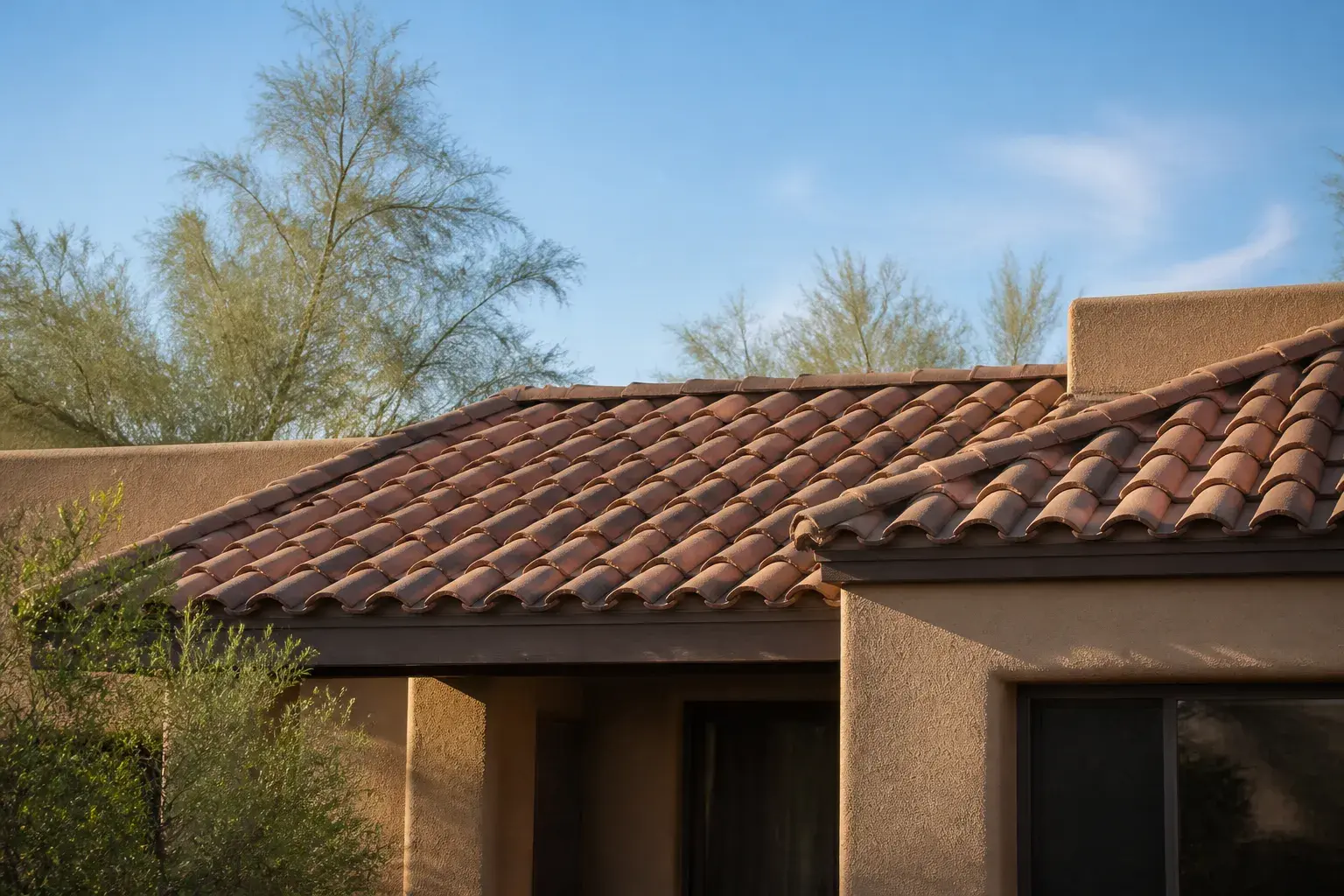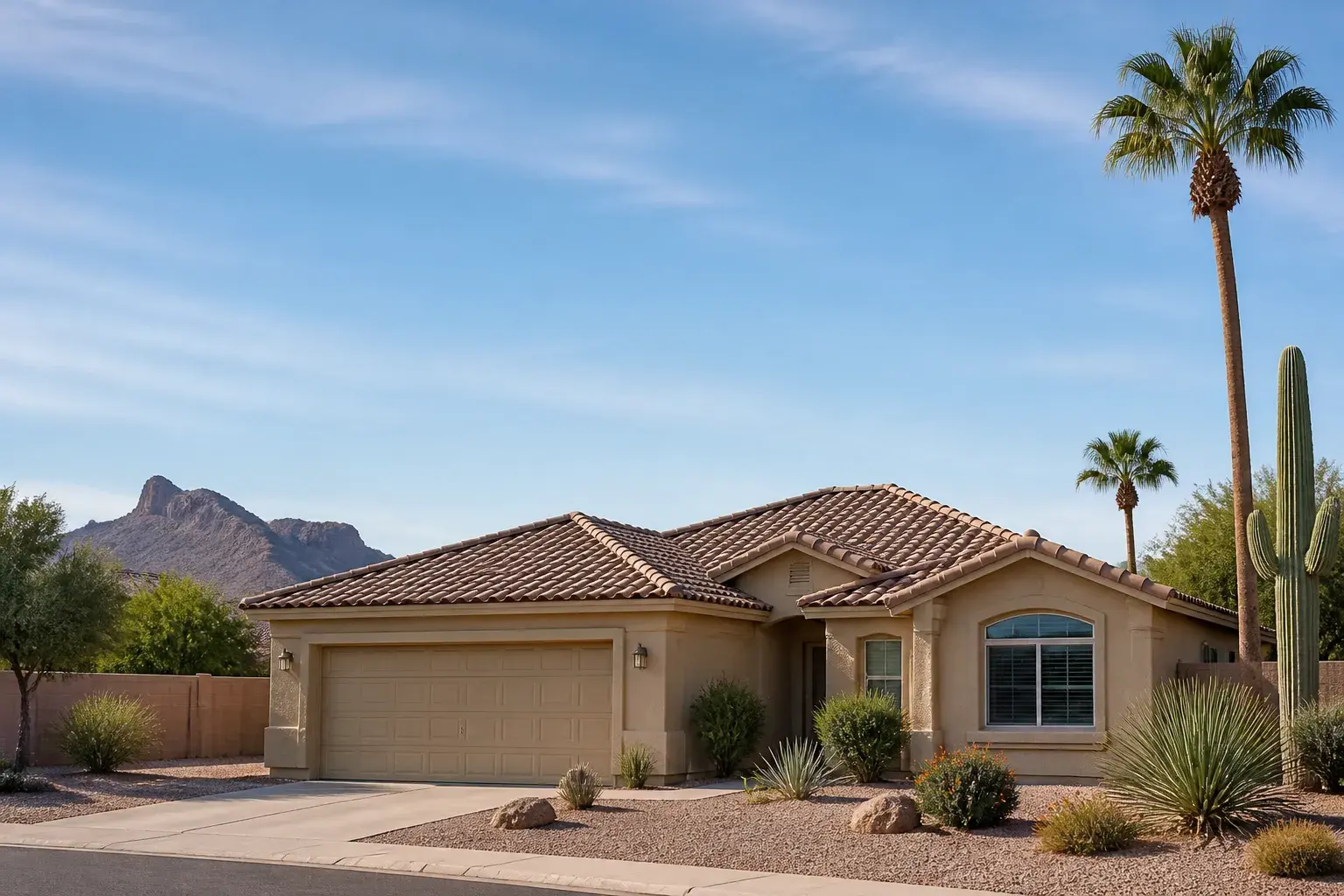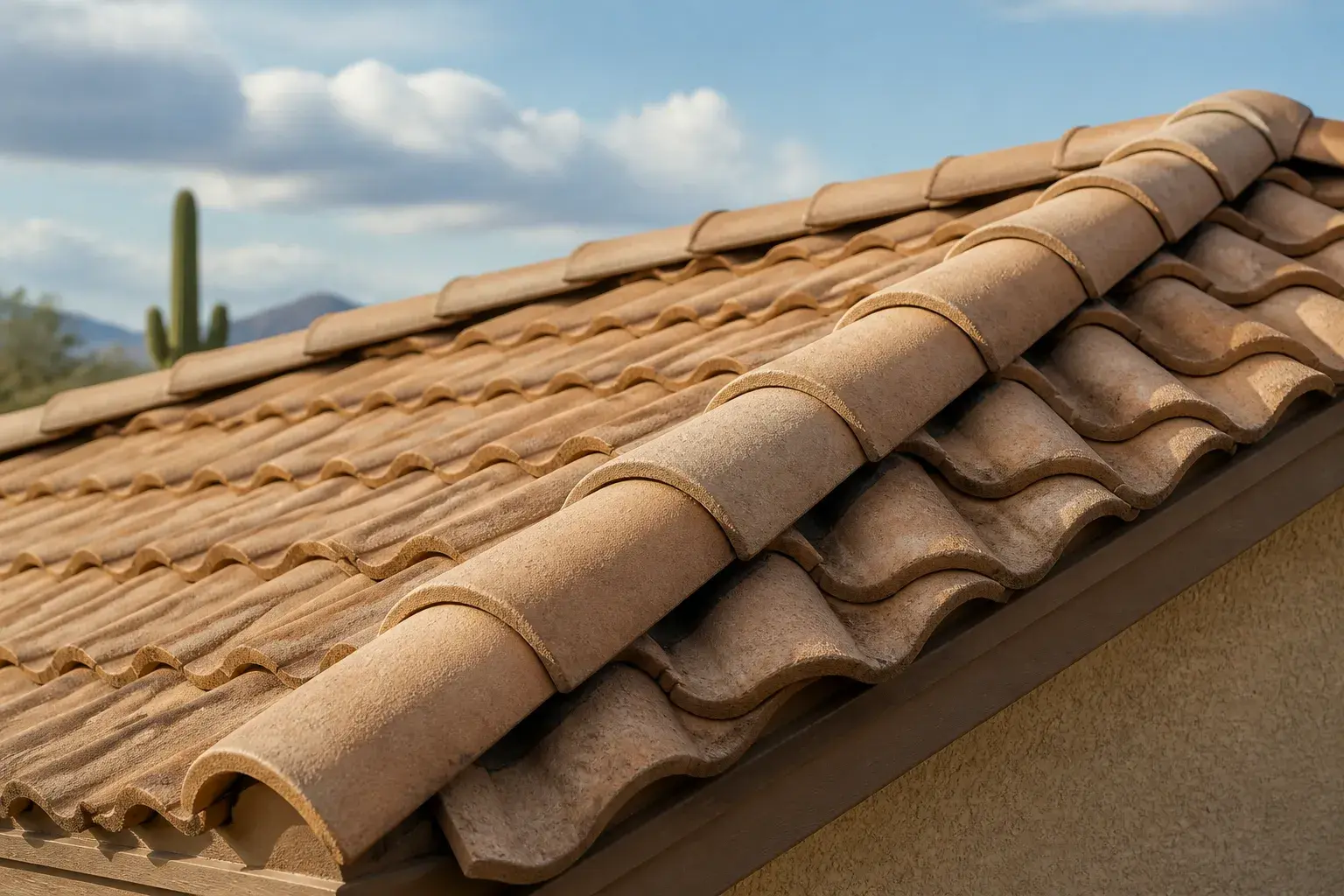
If you notice a stain on the ceiling, hear dripping in the attic, or find a wet wall after rain, the first goal is to limit the damage and figure out where the water is entering. In Mesa, leaks can show up fast after a monsoon burst, and the source is not always directly above the stain. A small leak can travel along rafters, under underlayment, or through attic insulation before it becomes visible inside.
First Steps
Move anything valuable away from the affected area and place a bucket or towel under active dripping. If you can do so safely, check the attic for wet insulation, visible daylight, or damp wood. Take photos of the stain, the leak area, and any roof damage you can see from the ground. Avoid climbing onto the roof yourself, especially if tiles are loose, surfaces are slick, or the roof pitch is steep.
What Usually Causes It
In this part of Arizona, leaks often come from cracked tile, worn flashing around vents or chimneys, lifted roof edges after wind, or failed seals around penetrations. On flat sections, ponding water and aging materials can also create trouble. A roof repair inspection can separate a simple issue from a broader problem that needs more than a patch. If the leak is near valleys or roof transitions, the repair may involve several parts of the system, not just the obvious spot.
What To Do Next
Schedule a roof inspection as soon as you can and share when you first noticed the leak, whether it happened during one storm or several, and if the stain has grown. Copper Mesa Roofing helps homeowners in Mesa, Gilbert, Chandler, and Tempe identify the source and decide whether a roof repair is enough or whether there are signs of wider wear. The sooner you address a leak, the more likely you are to protect drywall, framing, and insulation before the problem spreads.